🦃 Wild Turkey Subspecies Guide
NEWNorth American Wild Turkey Subspecies
Five distinct subspecies of wild turkeys (Meleagris gallopavo) inhabit North America, each adapted to unique regional habitats. Understanding subspecies differences enhances hunting strategies and appreciation for these magnificent game birds.
🏆 The Turkey Grand Slam
Harvesting all four primary huntable subspecies (Eastern, Osceola, Rio Grande, and Merriam's) in a single season is called a "Grand Slam" - one of turkey hunting's most prestigious achievements recognized by the National Wild Turkey Federation (NWTF).
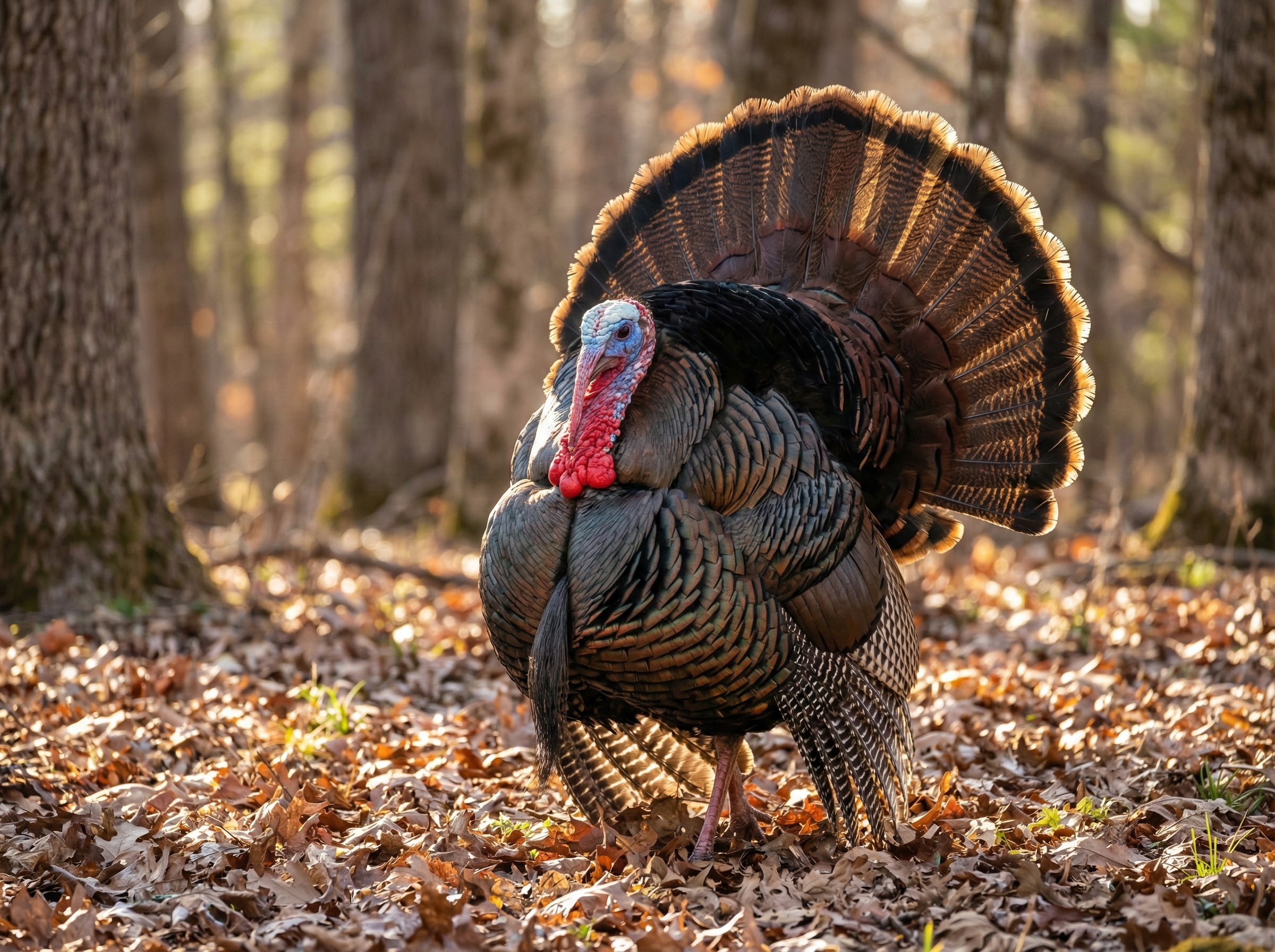
Key Characteristics
- Dark brown to black body plumage
- Chestnut-brown tail feather tips
- White and black wing barring
- Largest body size of all subspecies
🌲 Habitat
Mature hardwood forests with oak-hickory composition, mixed pine-hardwood stands, and agricultural areas. Prefers areas with diverse mast-producing trees and open understory.
💡 Hunting Tips
- Most call-shy of subspecies - use subtle calling
- Focus on dawn and late afternoon feeding patterns
- Scout ridgetops and creek bottoms for strutting areas
🌿 Conservation Corner
Wild turkeys are one of conservation's greatest success stories! In the early 1900s, habitat loss and unregulated hunting reduced populations to only about 30,000 birds across North America - they nearly went extinct!
Today, thanks to the National Wild Turkey Federation (NWTF) and state wildlife agencies, over 7 million wild turkeys roam our forests. Successful reintroduction programs have brought turkeys back to areas where they hadn't been seen in over a century.
This remarkable comeback shows how dedicated conservation efforts and scientific wildlife management can restore species to healthy populations!
🎉 Fun Facts for Kids!
- ⭐ Benjamin Franklin wanted the turkey to be America's national bird instead of the bald eagle! He thought turkeys were more respectable birds.
- ⚡ Turkeys are surprisingly fast! They can run up to 25 miles per hour on the ground and fly up to 55 mph in short bursts.
- 📢 A male turkey's gobble is so loud it can be heard up to a mile away! That's like shouting from one end of your school to the other and being heard clearly.
- 🐣 Baby turkeys are called "poults" (pronounced "polts"). They can leave the nest within 24 hours of hatching!
- 👀 Turkeys have incredible eyesight! They can see in full color and detect the tiniest movements from very far away - much better than humans!
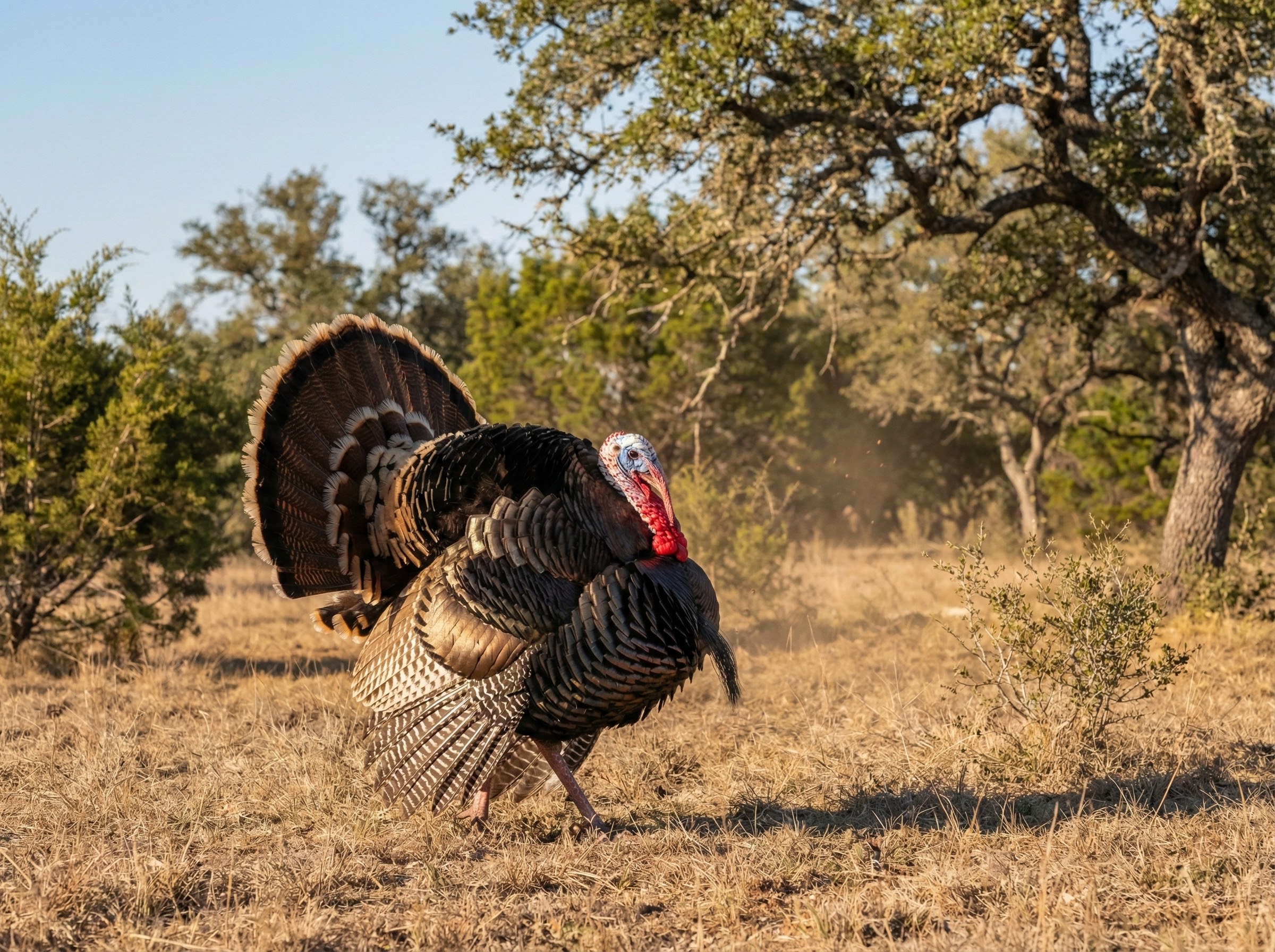
Key Characteristics
- Lighter overall coloration than Easterns
- Tan to buff tail feather tips
- Long legs adapted to open country
- Copper and greenish iridescence
🌲 Habitat
Mesquite, live oak, and cottonwood savannas along river bottoms and creek drainages. Highly dependent on water sources in arid environments.
💡 Hunting Tips
- Often respond well to aggressive calling
- Hunt near water sources in dry country
- Glass open areas for roosted birds at dawn
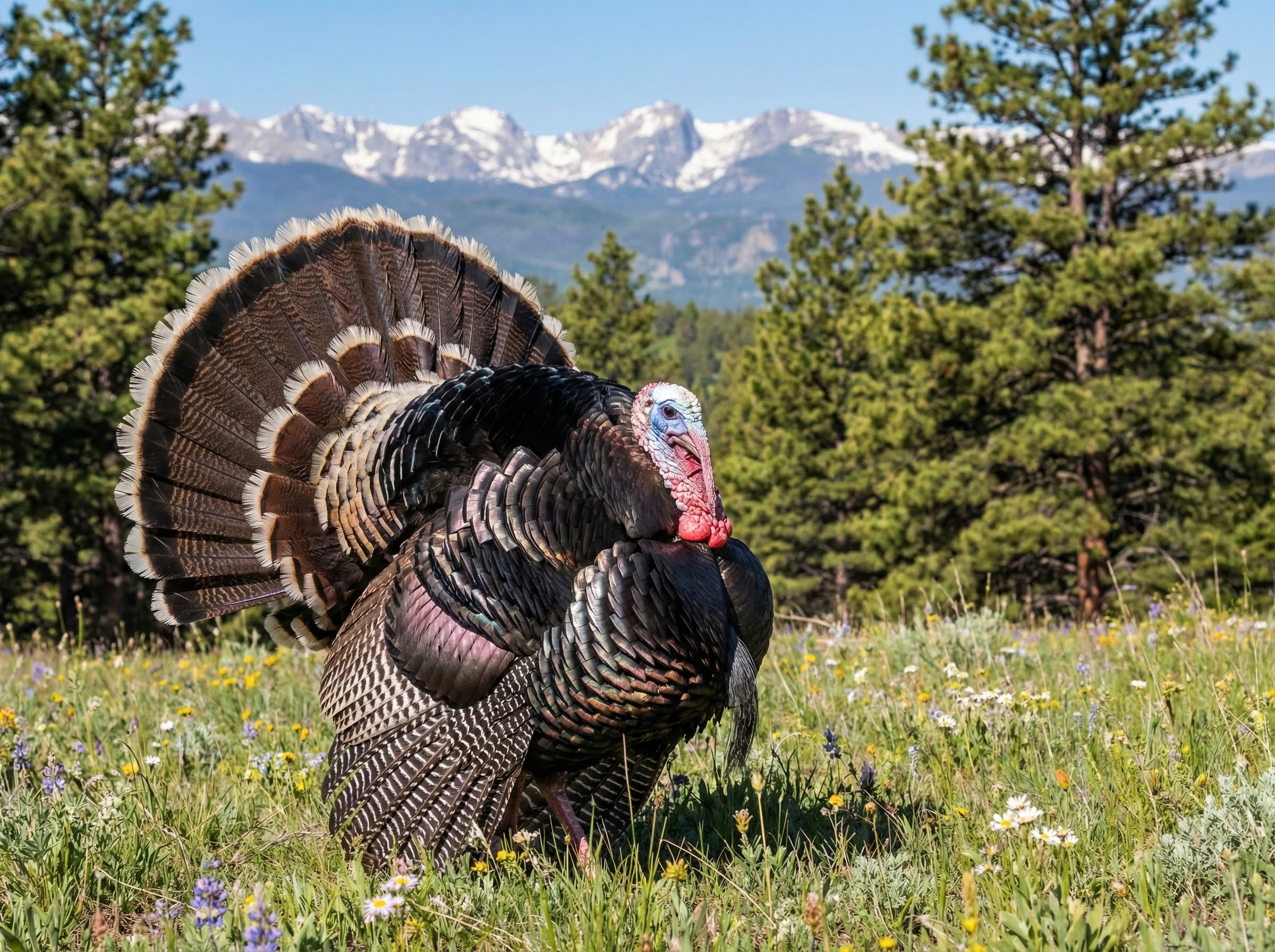
Key Characteristics
- Distinctive white tail feather tips and margins
- Purple and bronze iridescent body
- White rump patch
- Stocky build for mountain terrain
🌲 Habitat
Ponderosa pine forests with mountain meadows at 6,000-10,000 feet elevation. Migrate seasonally between winter valleys and summer mountain ranges.
💡 Hunting Tips
- Often very vocal and responsive to calls
- Hunt meadow edges and park-like pine stands
- Be prepared for steep terrain and altitude
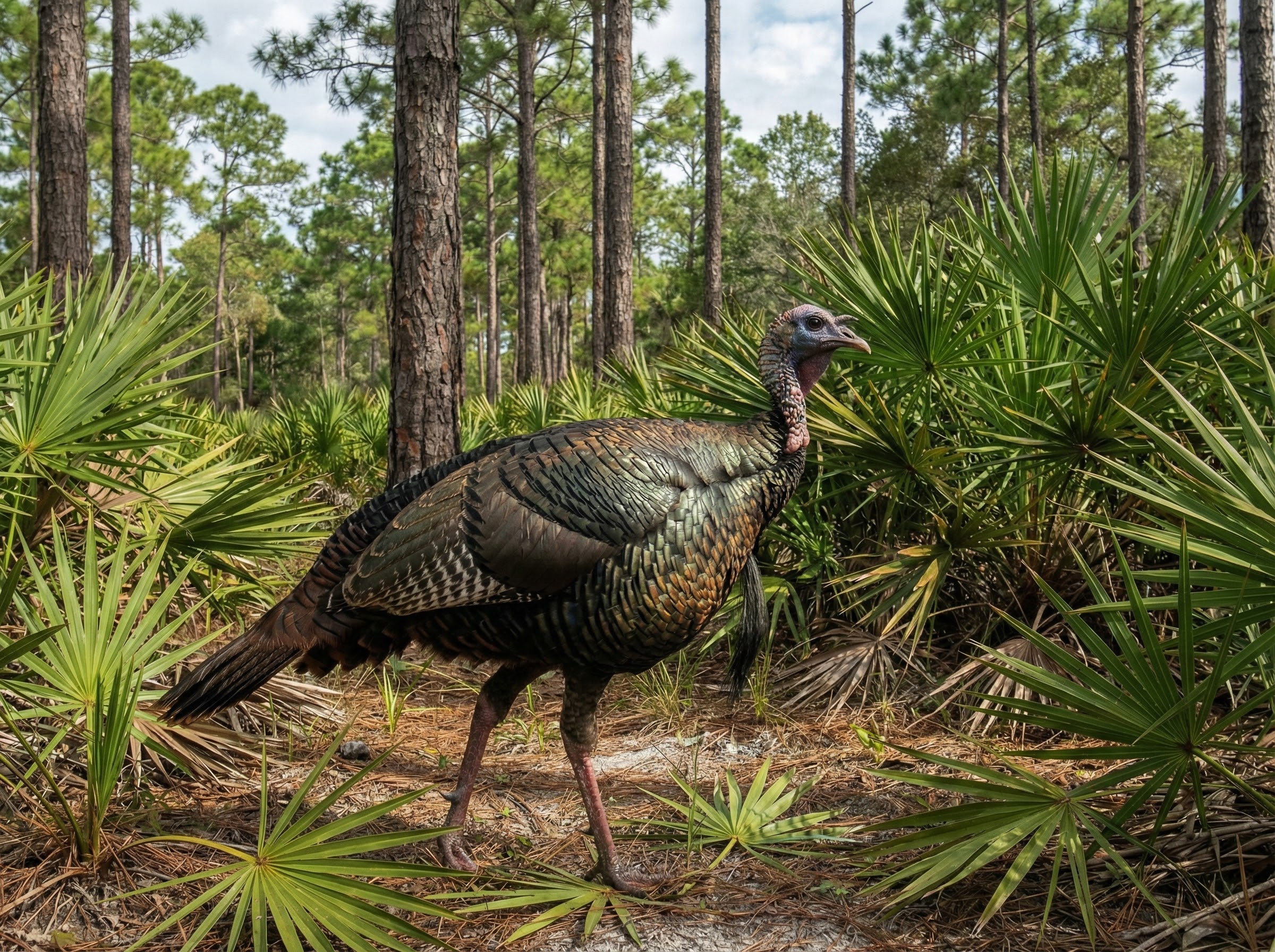
Key Characteristics
- Darkest overall coloration
- Smaller average body size
- Dark brown tail feathers with less white
- More iridescent green and red coloring
🌲 Habitat
Palmetto flats, cypress swamps, hardwood hammocks, and pine flatwoods unique to Florida's peninsula. Often found in wet, dense vegetation.
💡 Hunting Tips
- Hunt thick palmetto and swamp edges
- Can be vocal - use aggressive calling sequences
- Most challenging Grand Slam bird due to limited range
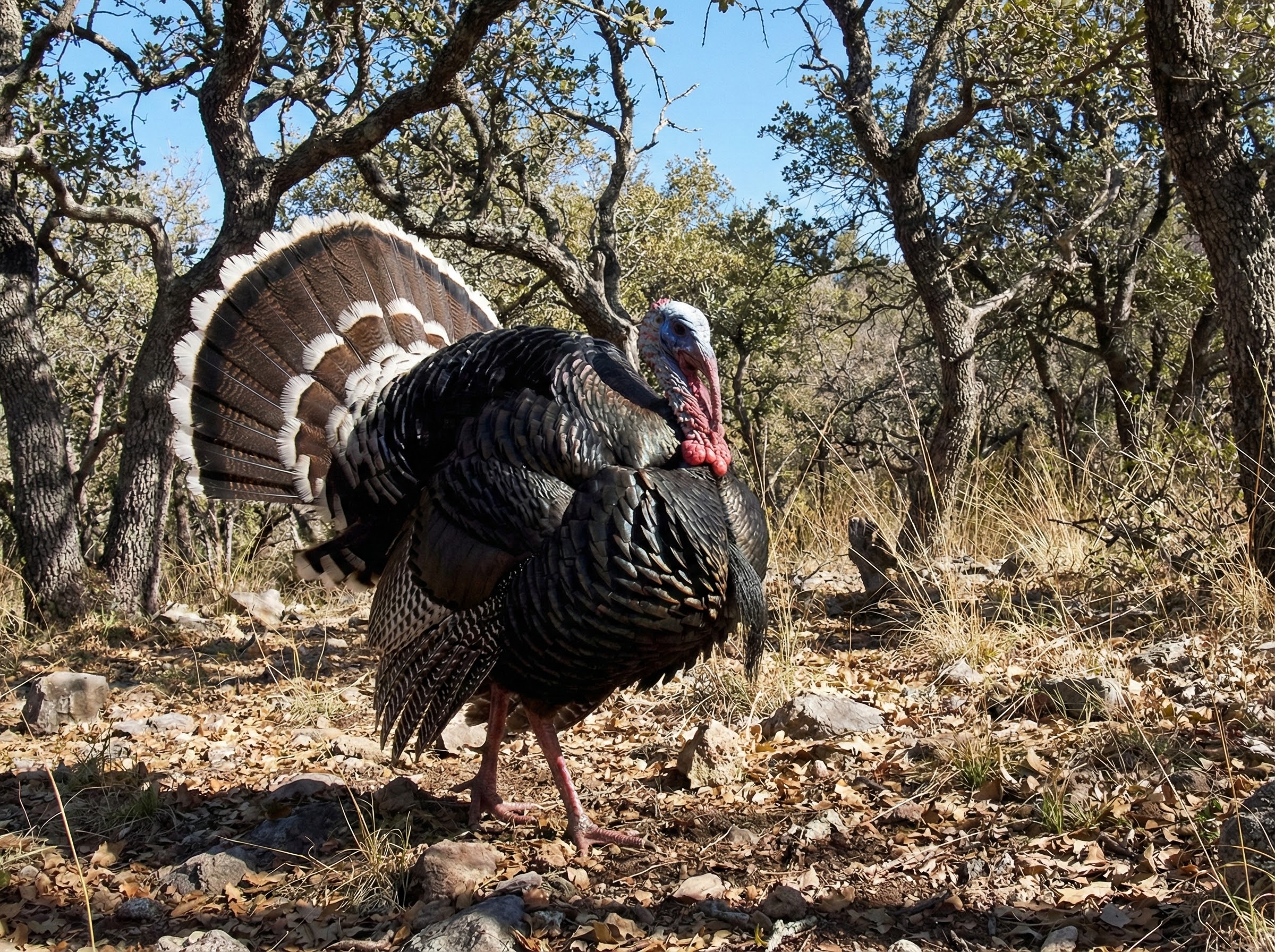
Key Characteristics
- Largest body and longest legs
- Blue-white tail tips (most white)
- Brilliant copper and gold iridescence
- Large white wing bars
🌲 Habitat
Oak and pine forests in rugged mountain canyons and plateaus. Often found at 5,000-9,000 feet in remote wilderness areas.
💡 Hunting Tips
- Requires Mexico hunt or limited U.S. draw tags
- Completing a "Royal Slam" includes Gould's
- Extremely challenging due to remote habitat