🪿 Goose Species Guide
POPULAR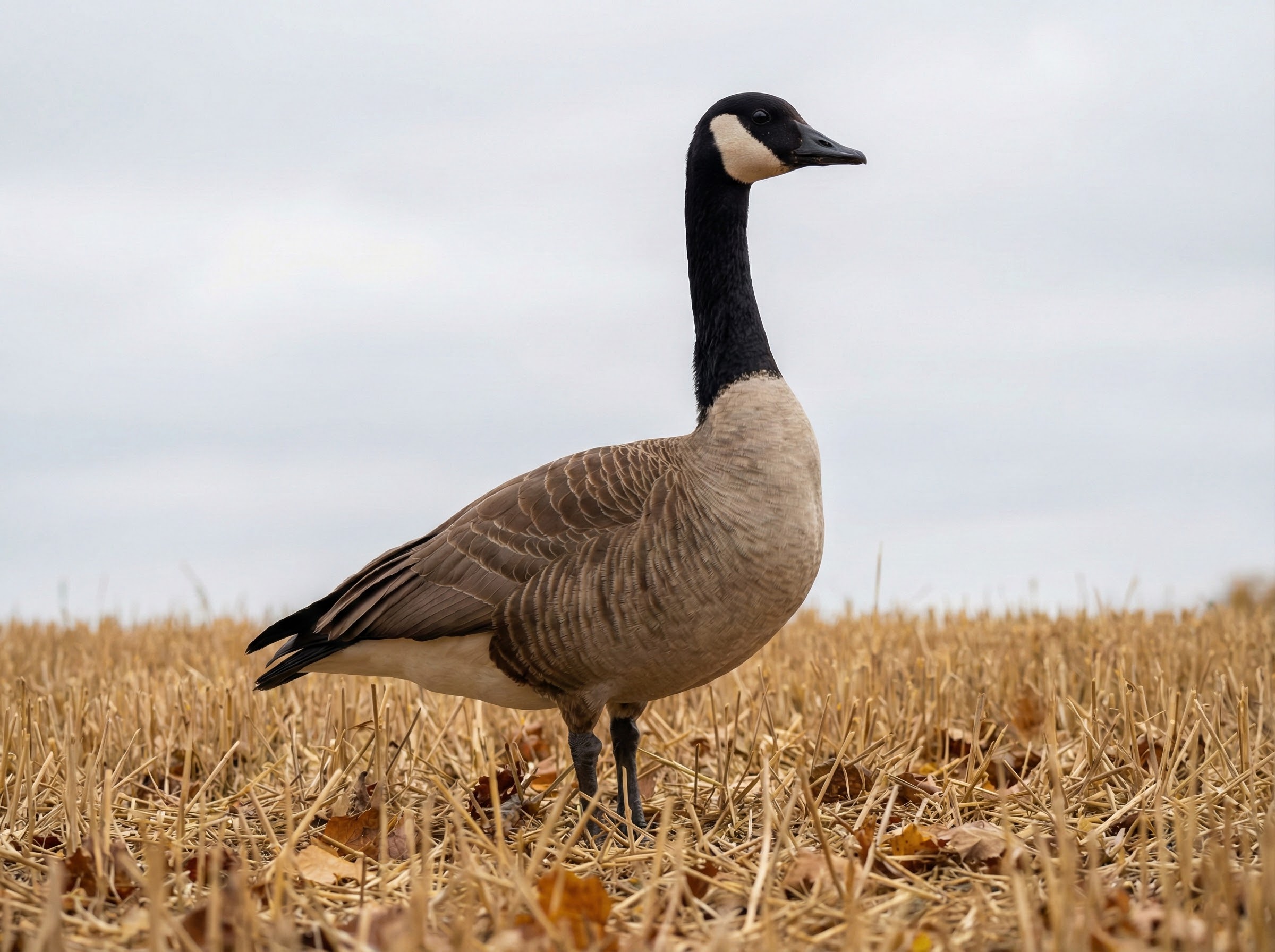
Canada Goose
Branta canadensis
The most iconic and widely recognized waterfowl in North America. Canada geese are highly adaptable, mate for life, and are known for their distinctive honking and V-formation flights. They range from small cackling geese to giant Canadas weighing over 20 pounds.
🎯 Identification
Plumage: Black head and neck with distinctive white cheek patch (chinstrap). Brown back, lighter underparts, black tail with white rump band visible in flight.
Size Variation: 11 recognized subspecies ranging from small cackling geese (3-4 lbs) to giant Canadas (15-20 lbs).
Voice: Deep, resonant two-note honk "ah-HONK". Larger geese have deeper voices.
🌍 Habitat & Range
Found throughout North America from Arctic tundra to Mexico. Highly adaptable to various habitats including marshes, lakes, rivers, agricultural fields, and urban parks.
Migration: Northern populations migrate south in fall (September-November), flying in V-formations at altitudes up to 9,000 feet. Can travel 1,500 miles in a single day at speeds of 40-60 mph.
🍽️ Feeding Behavior
- Primarily herbivores feeding on grasses, grains, and aquatic plants
- Feed heavily in agricultural fields (corn, wheat, soybeans)
- Morning and evening feeding flights most active
- Can strip a field rapidly when feeding in large flocks
👨👩👧👦 Social Behavior
Highly social birds that travel in family groups. Mate for life and both parents care for goslings. Form large flocks during migration and winter. Dominant pairs lead family groups.
Communication: Use over 13 distinct vocalizations for different situations including greeting, alarm, and feeding calls.
🌱 Conservation Corner
Population Recovery Success Story: Canada geese populations were critically low in the early 1900s due to overhunting and habitat loss. Through dedicated conservation efforts, regulated hunting seasons, and wetland restoration, populations have recovered remarkably - one of North America's greatest conservation success stories!
Wetland Conservation: Canada geese depend on healthy wetlands for breeding, migration stopovers, and wintering habitat. Protecting and restoring these vital ecosystems benefits countless other wildlife species including ducks, shorebirds, fish, and amphibians.
Hunters as Conservationists: Waterfowl hunters contribute millions of dollars annually through duck stamp purchases, excise taxes on hunting equipment, and conservation organization memberships. These funds directly support wetland protection and restoration projects across North America, ensuring future generations can enjoy these magnificent birds.
🎉 Fun Facts for Kids!
- Lifelong Partners: Canada geese mate for life! Once they find their special someone, they stay together for 10-25 years, raising families together year after year.
- Energy-Saving Flight: Geese fly in a V-formation because it's like riding a bicycle behind someone - the goose in front creates an air current that makes flying easier for the birds behind. They take turns being the leader so no one gets too tired!
- Super Swimmers: Baby geese called goslings can swim just hours after hatching! They're covered in fuzzy down feathers and follow their parents into the water almost immediately.
- Marathon Migrants: Canada geese are incredible athletes! During migration, they can fly up to 1,500 miles in just 24 hours, traveling at speeds of 40-60 mph. That's like flying from New York to Florida in a single day!
- Chatty Birds: Geese are very talkative! Scientists have identified over 10 different calls that geese use to communicate. They have special sounds for "hello," "danger," "I found food," and even "let's go!"
- Amazing Eyesight: Canada geese can see farther and more clearly than humans. They can spot predators from great distances, which helps keep their families safe.
🎤 Calling Recommendations for Canada Geese
Classic Honk
Your bread-and-butter call. Use for long-range greeting and maintaining contact with working birds.
Cluck Sequence
Essential for close-range work. Use when birds are circling or approaching the spread.
Moan Call
The finisher. Use when birds are committed and preparing to land. Deep and resonant.
📅 Seasonal Behavior Patterns
Early Season (September - October)
Local birds and early migrants. Often gullible and respond well to calling. Establish feeding patterns quickly.
Peak Migration (November - December)
Large numbers of northern birds arrive. Best hunting opportunities. Birds are active and looking for food and rest areas.
Mid-Season (January)
Birds become educated to hunting pressure. Decoy spreads and calling must be more refined. Focus on feeding fields.
Late Season (February - March)
Most challenging period. Birds are wary and have seen it all. Subtle calling and large decoy spreads often work best.
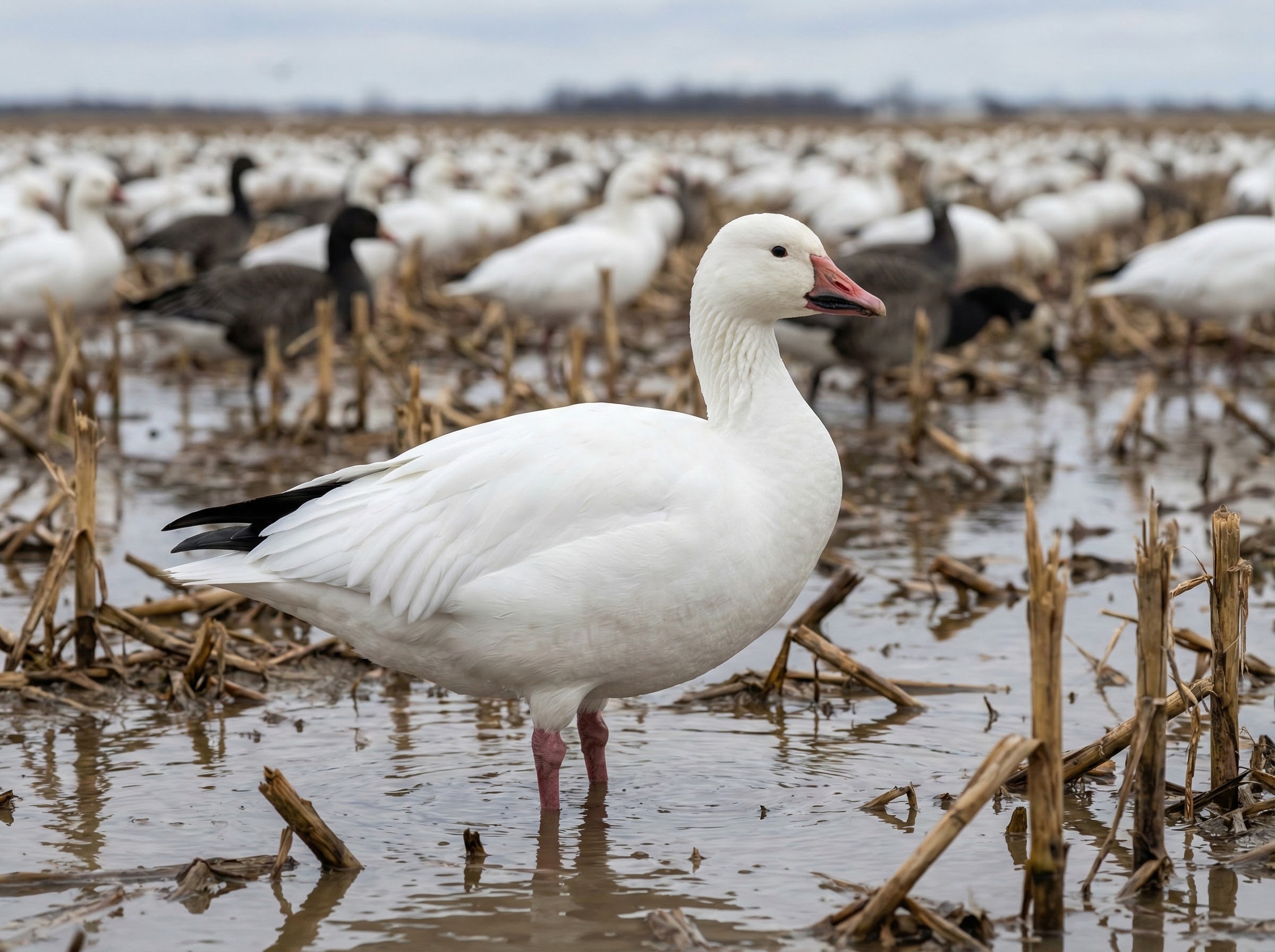
Snow Goose
Anser caerulescens
Spectacular white waterfowl known for migrating in massive flocks that can number in the thousands. Snow geese are highly vocal and social, creating unforgettable hunting experiences when large groups descend on fields and marshes.
🎯 Identification
White Morph: Pure white body with black wing tips. Pink bill with black "grin patch". Pink legs and feet.
Blue Morph: Dark gray-blue body with white head and neck. Same pink bill. About 20% of population in some areas.
Voice: High-pitched, nasal honking - much higher than Canada geese. Flocks create constant cacophony.
🌍 Habitat & Range
Breed in Arctic tundra, winter in southern U.S. and Mexico. Prefer large agricultural fields, especially rice fields and wheat stubble. Often found in massive concentrations.
Migration: Long-distance migrants traveling in enormous flocks. Spring and fall migrations are spectacular events along traditional flyways.
🍽️ Feeding Behavior
- Feed primarily in agricultural fields during winter
- Prefer waste grain, especially rice, corn, and wheat
- Feed in massive numbers, creating "blizzards" of birds
- Often feed throughout the day in safe areas
🎯 Hunting Strategies
Snow geese require large spreads (hundreds to thousands of decoys) and aggressive calling. They're extremely social and won't commit to small spreads.
Key Tactics: Large decoy numbers, electronic callers (where legal), white layout blinds, and patience for the right conditions.
🎤 Calling Recommendations for Snow Geese
High-Pitched Honks
Fast, nasally honking at high volume. Snow geese are loud and constant callers.
Feeding Chatter
Rapid, excited murmuring. Snow geese are very vocal when feeding in groups.
Volume and Aggression
Unlike Canada geese, more calling is often better. Snow geese respond to aggressive calling.
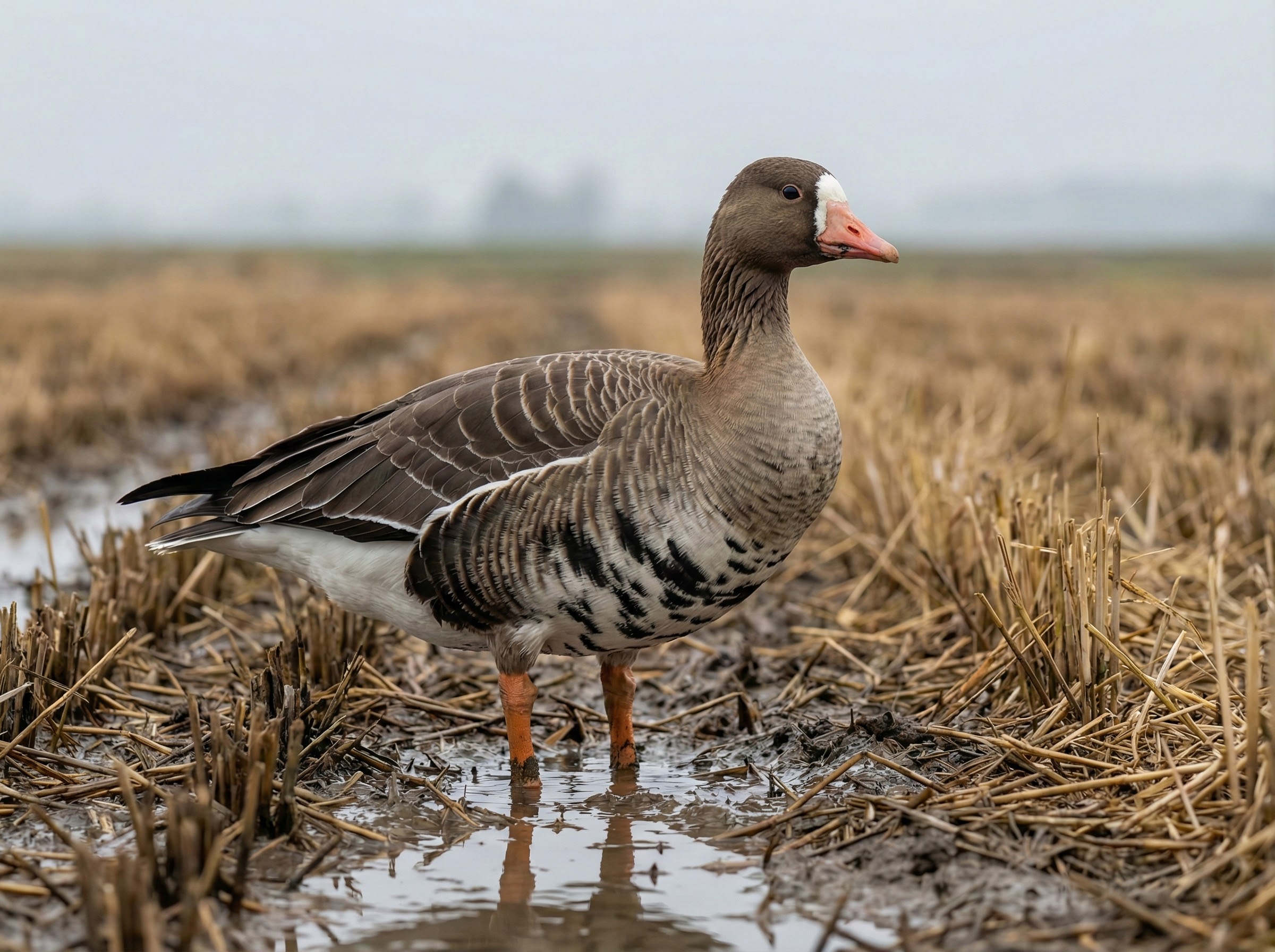
Greater White-Fronted Goose (Specklebelly)
Anser albifrons
Considered by many to be the most prized waterfowl. "Specks" are wary, intelligent, and respond wonderfully to expert calling. Their distinctive appearance and challenging nature make them a favorite among goose hunters.
🎯 Identification
Adults: Brown-gray overall with distinctive white forehead patch, pink-orange bill, and black-barred belly giving "speckled" appearance. Orange legs.
Juveniles: Lack white forehead and belly bars. Darker overall with yellow legs.
Voice: High-pitched, laughing "kla-ha, kla-ha" - very distinctive from other geese.
🌍 Habitat & Range
Breed in Arctic tundra of Alaska and Canada. Winter primarily in California's Central Valley, Texas Gulf Coast, and Mexico. Smaller numbers in Louisiana and Arkansas.
Migration: Long-distance migrants with strong site fidelity. Return to same wintering areas year after year.
🍽️ Feeding Behavior
- Prefer rice fields, grain stubble, and flooded pastures
- Often mix with snow geese in feeding areas
- Feed morning and evening, roost on water during day
- Extremely habitual once they establish patterns
🎯 Hunting Strategies
Specklebellies are incredibly decoy and call responsive when done right. They prefer smaller, more intimate setups than snow geese but still want to see movement and hear calling.
Pro Tip: Master the speck call - it's unique and these birds respond aggressively to proper calling.
🎤 Calling Recommendations for Specklebellies
Laughing Call
The distinctive "kla-ha" laugh. Fast double notes with yodel quality. Essential for specks.
Feeding Chuckle
Soft, rapid chuckling when birds are close. Specks respond beautifully to this.
Greeting Sequence
Series of laughs to flag down distant birds. Specks are very responsive to proper calling.
White-Fronted Goose Info
Additional Resources
See the Specklebelly section for complete information on Greater White-Fronted Geese. These are the same species - "specklebelly" is the common hunter's name, while "white-fronted goose" is the formal name.