🦆 Duck Species Guide
POPULAR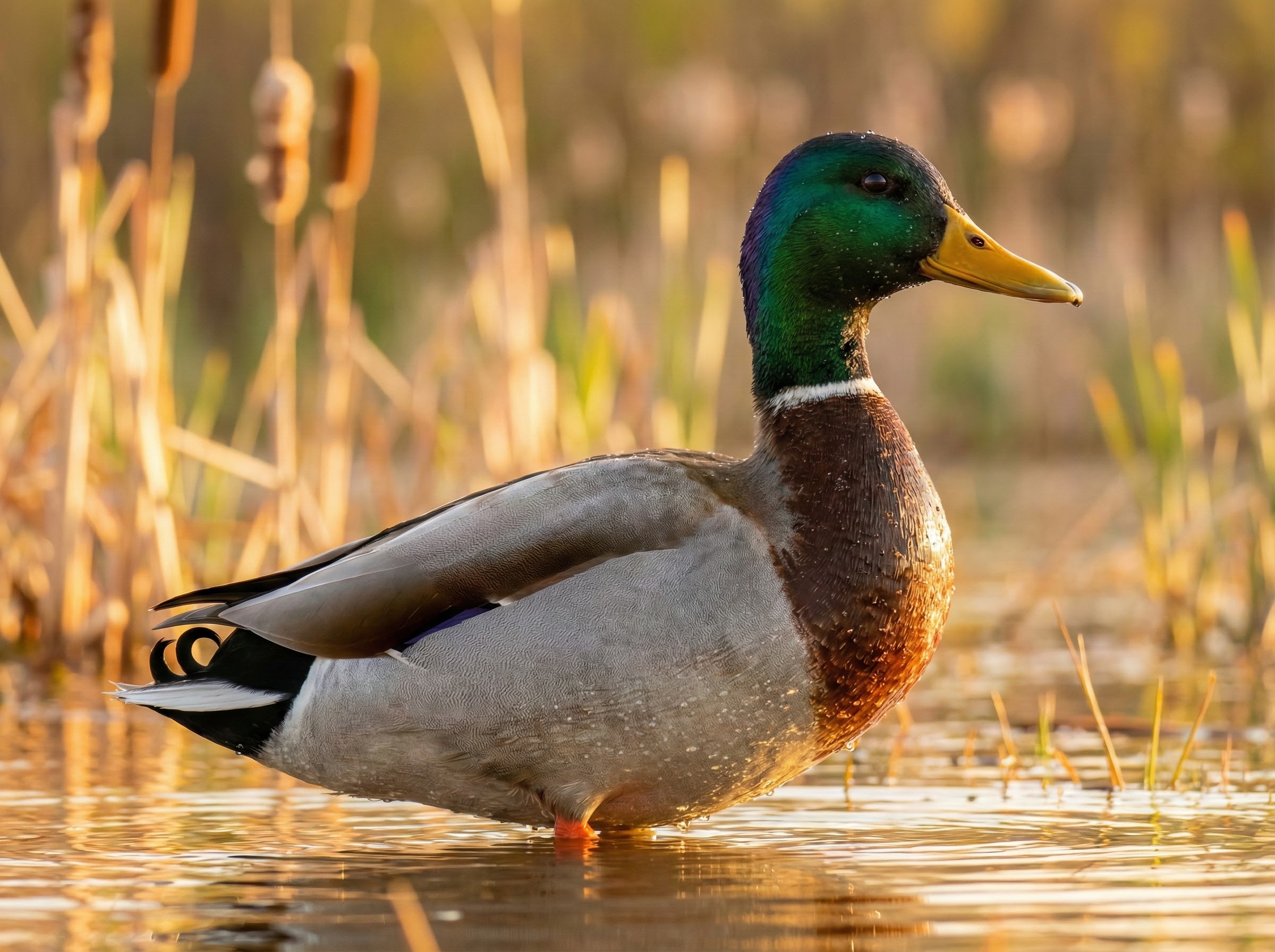
Mallard
Anas platyrhynchos
The most abundant and widely recognized duck in North America. Mallards are the foundation of waterfowl hunting and the standard by which duck calls are measured. Highly adaptable and found in virtually every wetland habitat.
🎯 Identification
Drake: Iridescent green head, yellow bill, white neck ring, chestnut breast, gray body, and curled black tail feathers (the "sex feather").
Hen: Mottled brown overall with orange bill marked with black. Both sexes show purple-blue speculum bordered with white.
🌍 Habitat & Range
Found across North America from Alaska to Mexico. Prefer shallow wetlands, flooded timber, agricultural fields, and urban ponds. Highly adaptable—will use everything from prairie potholes to city parks.
Migration: Northern birds migrate October-December. Southern populations may be resident year-round.
🌱 Conservation Corner
Population Status: Healthy! Approximately 10 million mallards in North America thanks to wetland conservation efforts.
How Hunters Help: Duck stamp purchases have protected over 6 million acres of wetland habitat. Every hunter who buys a duck stamp helps fund conservation!
Did You Know? Ducks Unlimited has conserved over 15 million acres of habitat across North America since 1937.
🎉 Fun Facts for Kids!
- Waterproof Feathers: Mallards spread oil from a special gland to keep their feathers dry - that's why water rolls right off!
- Super Sleepers: Ducks can sleep with one eye open and half their brain awake to watch for predators!
- Fast Fliers: Mallards can fly up to 55 mph - as fast as a car on the highway!
- Big Families: A hen can lay 8-13 eggs, and ducklings can swim just hours after hatching!
- Color Change: A drake's green head isn't actually green - it's special feathers that reflect light like a soap bubble!
🍽️ Feeding Behavior
- Dabbling duck—feeds by tipping up, not diving
- Prefers water under 16 inches deep
- Diet: seeds, grain, aquatic plants, invertebrates
- Peak feeding: dawn and last hour before sunset
- Will field feed on waste grain extensively
🔊 Vocalizations
- Hen: Classic "quack" - only female makes this sound
- Drake: Soft "raeb-raeb" whistle
- Greeting call: 5-7 note descending sequence
- Feeding chatter: rapid "tikkitikki" sounds
- Frequency range: 250-500 Hz typical
📢 Best Calls for Mallards
Greeting Call
Primary call for working mallards. Use when birds are 100-300 yards out and you need their attention.
Feeding Chatter
Essential for finishing. As birds commit and cup wings, switch to soft feeding sounds to seal the deal.
Hail Call
For high-flying distant birds only. Use sparingly—overcalling spooks educated mallards.
Lonesome Hen
Effective on single drakes or pairs. The pleading quality can pull in birds that other calls won't.
📅 Seasonal Behavior
Early Season (October)
Local birds still present. Relatively unpressured and responsive to calling. Focus on feeding areas at dawn/dusk. Simple calling works well.
Migration Peak (November)
Fresh northern birds pushing through. Most responsive period—new birds haven't been educated. Hunt weather fronts and scout for new arrivals.
Late Season (December-January)
Educated, wary birds. Less is more with calling. Focus on decoy realism and concealment. Small spreads, minimal calling, patience wins.
Pairing Up (Late January)
Drakes actively courting hens. Lone hen calls can be very effective. Watch for paired birds and target single drakes following.
Northern Pintail
Anas acuta
The "greyhound of the skies," pintails are elegant, fast-flying ducks prized by waterfowlers. Known for their wariness and beautiful plumage, they're often considered the most challenging of the puddle ducks to decoy.
🎯 Identification
Drake: Chocolate brown head, white breast extending up neck in distinctive stripe, gray body, long black tail feathers (up to 10 inches).
Hen: Mottled brown, slimmer profile than mallard, shorter pointed tail. Bronze speculum with white trailing edge.
🔊 Vocalizations
- Drake: Soft, melodic whistle "preeep"
- Hen: Hoarse quack, weaker than mallard
- Generally quieter than other puddle ducks
- Whistling calls work on drakes
📢 Calling Strategy for Pintails
Pintail Whistle
Drake whistle is highly effective. Simple, soft whistles that mimic the drake's call.
Minimal Mallard Calls
Pintails are wary of aggressive calling. Soft hen quacks only. Let decoys do the work.
American Wigeon
Mareca americana
Also known as "baldpate" for the drake's white crown, wigeons are social ducks often found in large flocks. They're notorious for stealing food from diving ducks and are highly vocal.
🎯 Identification
Drake: Cream-colored crown, green eye patch, pinkish-brown breast, gray sides, white wing patch visible in flight.
Hen: Brownish overall with gray head, smaller bill than mallard. Both show bright white belly in flight.
🔊 Vocalizations
- Drake: Distinctive three-note whistle "whew-whew-whew"
- Hen: Low growling quack
- Very vocal in flight and on water
- Wigeon whistle is easy to learn and effective
Green-Winged Teal
Anas crecca
The smallest dabbling duck in North America, green-wings are fast flyers that twist and turn in tight flocks. Popular with hunters for their challenging shot and excellent table fare.
🎯 Identification
Drake: Chestnut head with iridescent green ear patch, gray body, vertical white bar on side, cream-colored patch near tail.
Hen: Small, brown, with green speculum. Similar to other hen teal. Note small size and bill shape.
🔊 Vocalizations
- Drake: High-pitched cricket-like "krrick"
- Hen: High, weak quack
- Teal-specific calls can work early season
- Often decoy well without any calling
Wood Duck
Aix sponsa
Perhaps the most beautiful duck in North America, wood ducks are cavity nesters found in forested wetlands. Their striking plumage and unique vocalizations make them unmistakable.
🎯 Identification
Drake: Stunning iridescent green/purple crest, red eye and bill base, white face pattern, chestnut breast with white spots.
Hen: Gray-brown with white teardrop eye ring, crested head. Both show iridescent speculum and large heads.
🔊 Vocalizations
- Drake: Rising whistle "jeeee"
- Hen: Loud squealing "oo-eek, oo-eek"
- Wood duck calls are distinctive
- Squealer calls very effective on this species
Gadwall
Mareca strepera
Often overlooked, the "gray duck" is actually one of the most elegant waterfowl. Gadwalls have subtle beauty and excellent wariness that makes them challenging and rewarding to hunt.
🎯 Identification
Drake: Gray-brown overall, black rear end, white speculum patch unique among puddle ducks. Intricate vermiculated breast pattern.
Hen: Similar to hen mallard but slimmer, with orange bill sides and white speculum. Often confused with mallard hens.
🔊 Vocalizations
- Drake: Single-note whistle and grunt "mep"
- Hen: Similar to mallard but higher pitched
- Respond to standard mallard calls
- Decoy readily but approach cautiously